Standing-seam installation
Concealed-fastener panel systems detailed around roof geometry, attachment, transitions, ventilation, and drainage.
Metal roofing in Athens, GA
Standing-seam metal roofing for residential and commercial properties—selected and detailed for water control, thermal movement, durable performance, and enduring curb appeal.
Request a metal roofing estimatePrimary systemStanding seam
FastenersConcealed
ApplicationsResidential & commercial
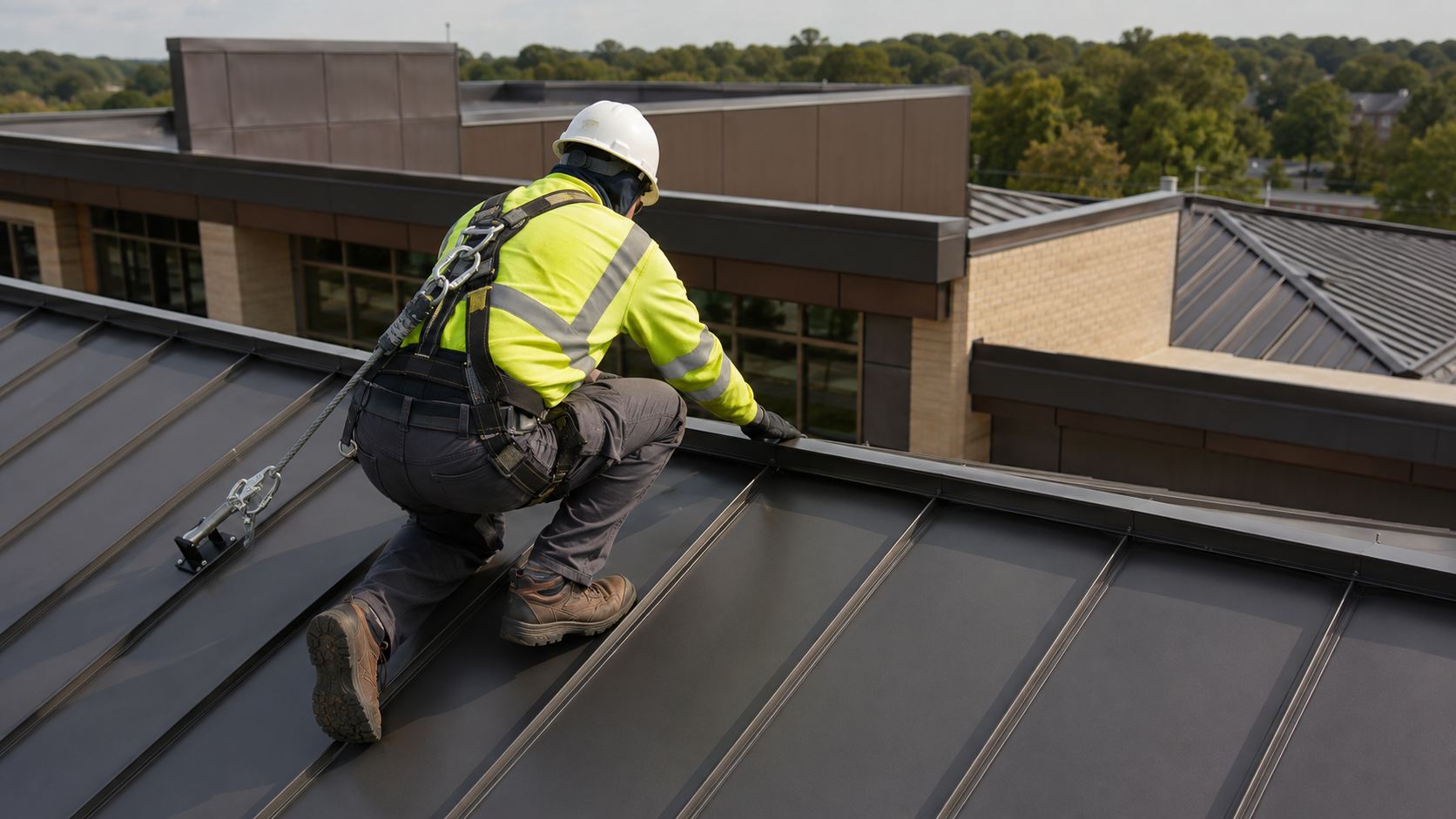 Focused expertise · Athens, Georgia
Understand the system
Standing-seam panels create a crisp architectural profile, but panel quality alone does not make a successful roof. Eaves, rakes, ridges, valleys, transitions, penetrations, clips, underlayment, and movement allowances must work together.
A metal roof expands and contracts as temperatures change. The roof geometry, panel length, attachment method, and flashing design should accommodate that movement while maintaining a dependable water-shedding path.
What we evaluate and address
Each request begins with the property type, system, symptoms, urgency, and location. That context determines what expertise and next step are appropriate.
Concealed-fastener panel systems detailed around roof geometry, attachment, transitions, ventilation, and drainage.
Coordinate tear-off or approved recover strategy, deck condition, underlayment, flashing, trim, and gutters.
Plan durable panel systems for offices, retail, industrial, agricultural, and institutional properties.
Investigate damaged panels, loose details, sealant failures, penetrations, fasteners, closures, and flashing transitions.
Address the custom-fabricated details that finish edges, walls, valleys, ridges, and roof penetrations.
Determine whether symptoms are isolated, movement-related, installation-related, or part of broader system aging.
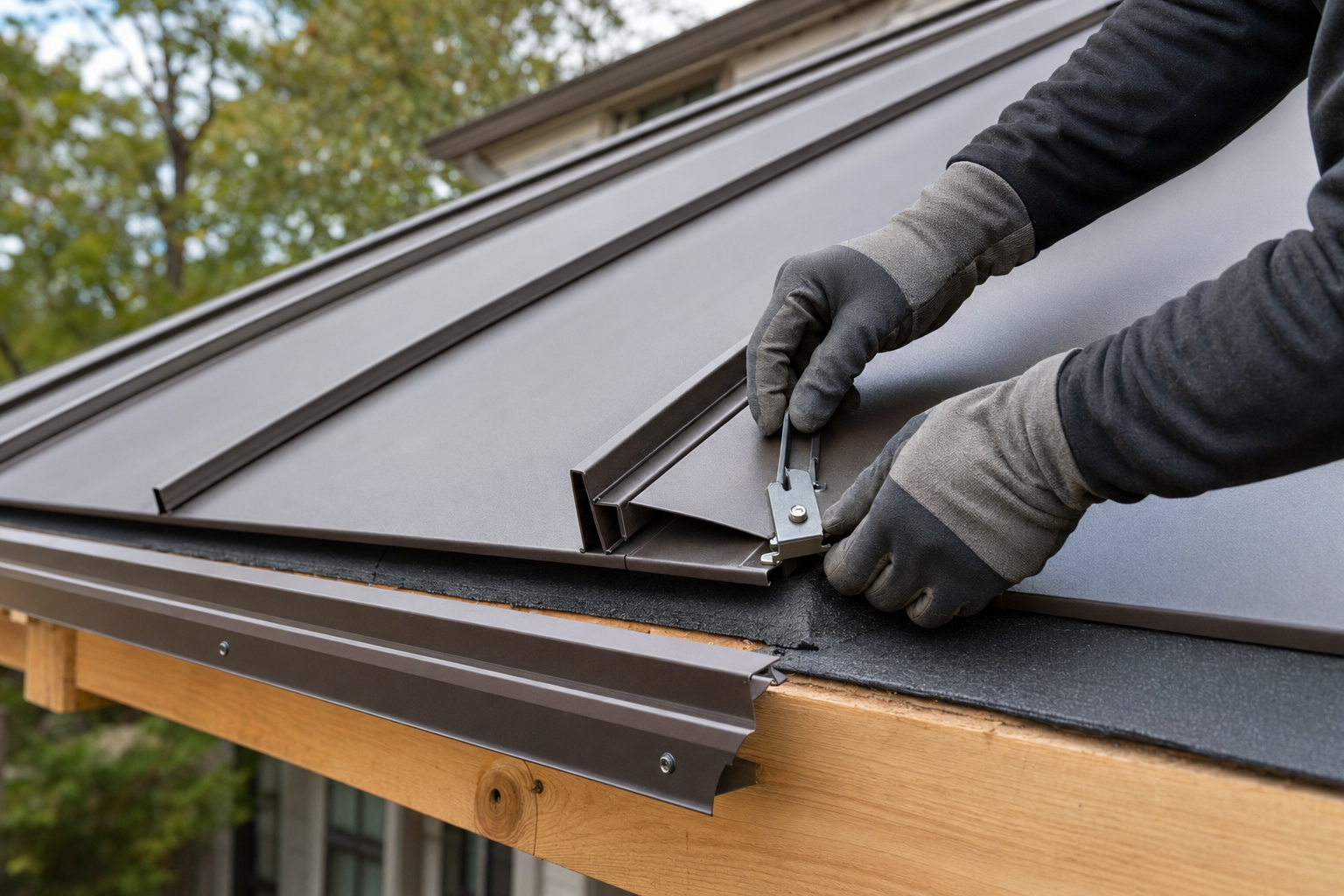
Standing-seam anatomy
Long-term performance is determined at edges, transitions, penetrations, and attachment points—where the roof must shed water while allowing normal thermal movement.
Concealed clipsSecure panels without exposed primary fasteners.
Raised seamsLift joined panel edges above the main drainage plane.
Purpose-built flashingResolves ridges, valleys, walls, eaves, and penetrations.
Choose the application
Residential and commercial metal roofs share core principles, but the geometry, access, detailing, operations, and decision process are different.
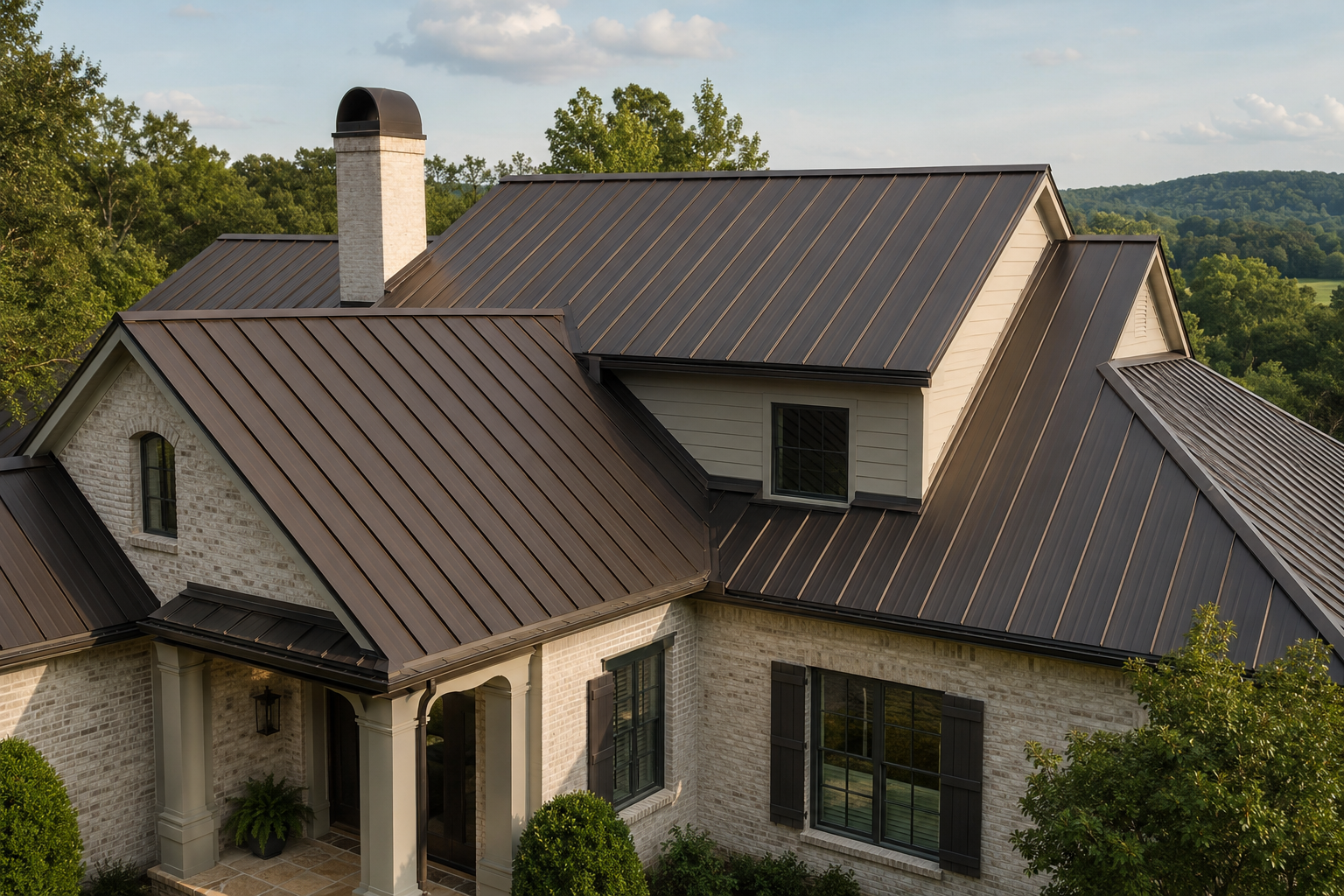
Residential work centers on roof geometry, visual proportion, ventilation, chimneys, valleys, dormers, gutters, and a clean relationship with the architecture.
Commercial work adds access, equipment, long panel runs, expansion, penetrations, safety, phasing, documentation, and occupied-facility coordination.
Conditions worth investigating
One symptom rarely tells the whole story. These conditions help frame the inspection—not predetermine the answer.
On exposed-fastener systems, washers and fasteners can loosen or deteriorate under repeated temperature cycling.
Vents, pipes, curbs, skylights, and transitions interrupt the panel field and require carefully maintained flashing.
Some waviness is cosmetic, while pronounced distortion can warrant review of substrate, handling, attachment, or thermal movement.
Sealants are detail components, not a substitute for sound water-shedding geometry and correctly formed flashing.
How the work should progress
The process should turn uncertainty into documented priorities and a practical path forward.
Measure slopes, panel lengths, valleys, dormers, walls, penetrations, and transitions that drive fabrication and detailing.
Coordinate panel profile, metal type, finish, deck, underlayment, clips, ventilation, and compatible accessories.
Resolve edges, ridges, valleys, walls, penetrations, transitions, and drainage before panels are ordered.
Protect materials, maintain panel alignment, execute details carefully, and inspect the completed water-shedding system.
Decisions that shape performance
Standing-seam systems conceal primary attachments and generally accommodate movement better; exposed-fastener panels serve different budgets and applications.
Factory-applied coatings influence appearance, heat absorption, and long-term color retention. Selection should fit the architecture and product specification.
A properly designed roof assembly, deck, attic, and insulation influence interior sound; metal roofing is not automatically loud inside an occupied building.
Helpful answers
Good roofing decisions start with better questions. A property inspection is still necessary for a project-specific recommendation.
Yes. Standing-seam systems are used on many residential designs, from traditional to contemporary. Roof geometry, neighborhood context, budget, and detailing should guide the choice.
Sometimes, subject to deck condition, local requirements, manufacturer instructions, roof geometry, existing layers, and the proposed assembly. The existing roof still needs evaluation.
Metal roofing does not cause lightning strikes. It is noncombustible, but the building’s overall lightning protection and grounding needs are separate engineering considerations.
Standing-seam panels use raised seams and concealed primary clips or fasteners. Exposed-fastener panels attach through the face of the panel and require ongoing attention to fasteners and washers.
Athens, Georgia
Tell us what you’re seeing. We’ll categorize the request and connect it with the appropriate roofing specialty.
Request a metal roofing estimate