Drainage assessment
Review roof slope, ponding, internal drains, scuppers, gutters, outlets, downspouts, and overflow routes.
Commercial gutters and roof drainage
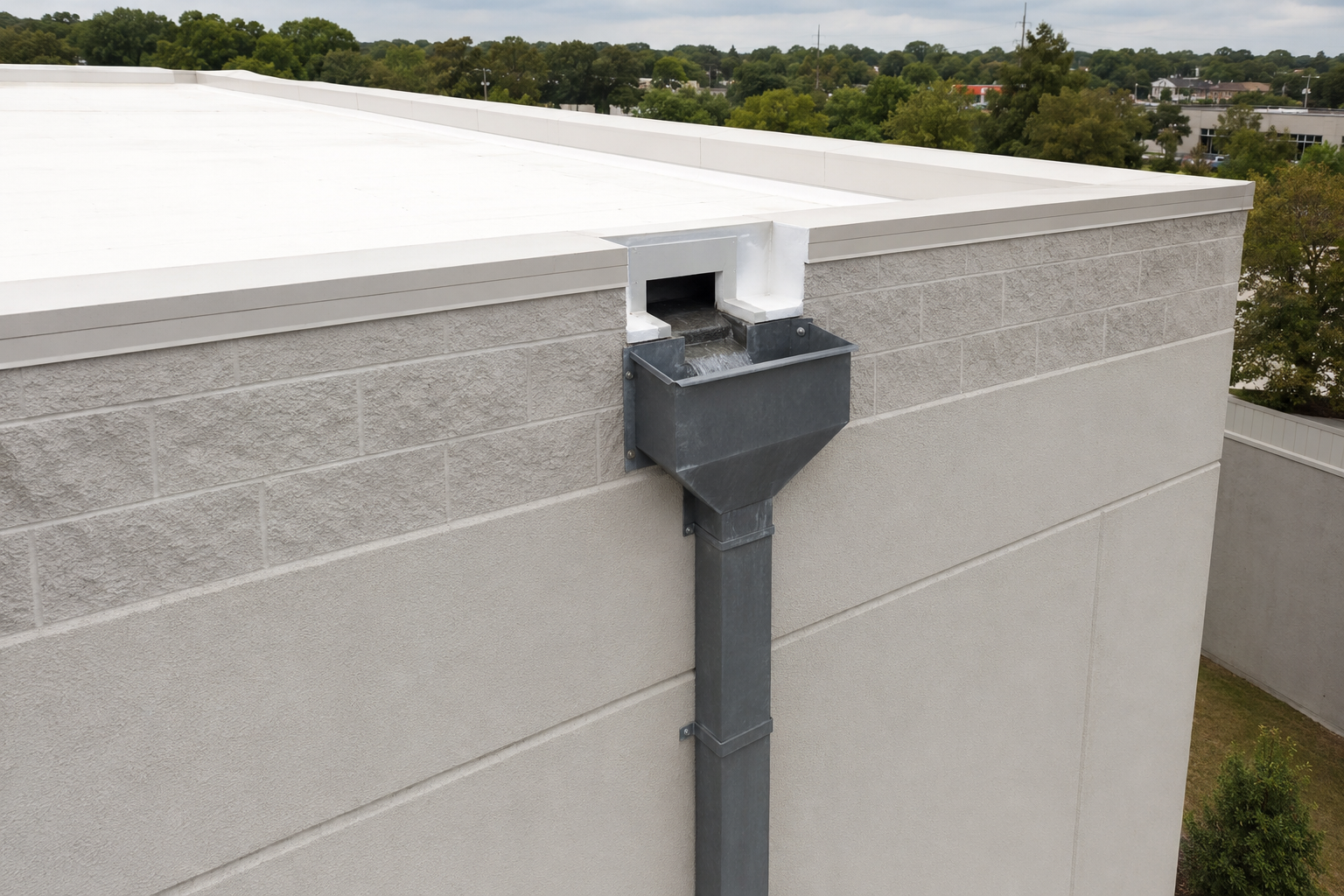
Commercial drainage may combine internal drains, scuppers, collector heads, gutters, downspouts, and overflow routes. Each component must pass water reliably to the next.
Request a commercial drainage assessmentBuilt for the property
Large low-slope and metal roofs can collect substantial water across broad areas. Debris, inadequate slope, blocked strainers, undersized outlets, damaged scuppers, or poor discharge can create ponding and overflow.
A building-level assessment reviews the complete path: roof slope, drains and scuppers, gutters or collector heads, vertical leaders, overflow provisions, discharge, and maintenance access.
Relevant services
Property type changes the roof geometry, access, safety, drainage, materials, disruptions, and details that must be considered.
Review roof slope, ponding, internal drains, scuppers, gutters, outlets, downspouts, and overflow routes.
Evaluate sizing, attachment, joints, outlets, collector heads, long runs, and discharge around larger roof areas.
Identify debris, bottlenecks, damaged components, and concentrated flow that can overwhelm the system.
Organize routine cleaning and inspection around trees, roof traffic, equipment, drains, strainers, and seasonal conditions.
Planning priorities
Commercial collection points must be evaluated around contributing area, rainfall intensity, roof slope, and overflow protection.
Drains, scuppers, gutters, and strainers should remain safely accessible for inspection and cleaning.
Discharge should avoid entrances, walks, landscaping, loading areas, walls, and foundation-adjacent erosion.
Looking for the broader system overview?
Explore commercial roofingAthens, Georgia
Share the building type, what you are seeing, and where the property is located. That context helps define the right next step.
Request a commercial drainage assessment